
Case study
CloudX – building a GTM engine for an operator‑built WMS

CloudX started as an internal WMS powering Bergen Logistics’ global network — proven in 30M+ units shipped and 500+ brands, but almost invisible as a commercial SaaS product. The mandate was to build the entire GTM engine from scratch and turn a hidden internal tool into a market‑ready, mid‑market WMS challenger.
Context
When we started, CloudX had a world‑class WMS used by operators every day inside Bergen Logistics — but almost no external GTM presence: thin website, no real SEO, no content engine, unclear ICP, and no unified commercial story. Prospects saw “another WMS,” not the operator‑built system it really was.
Internally, there were competing views of who the ideal customer was, how CloudX was different from legacy tools and 3PL portals, and what outcomes to lead with. Externally, competitors like ShipHero and Deposco dominated search, content, and category mindshare.
The opportunity — and the challenge — was to define a sharp mid‑market ICP, build a messaging and content system around it, and stand up a GTM engine that could turn CloudX from “the WMS Bergen uses” into a credible category challenger.
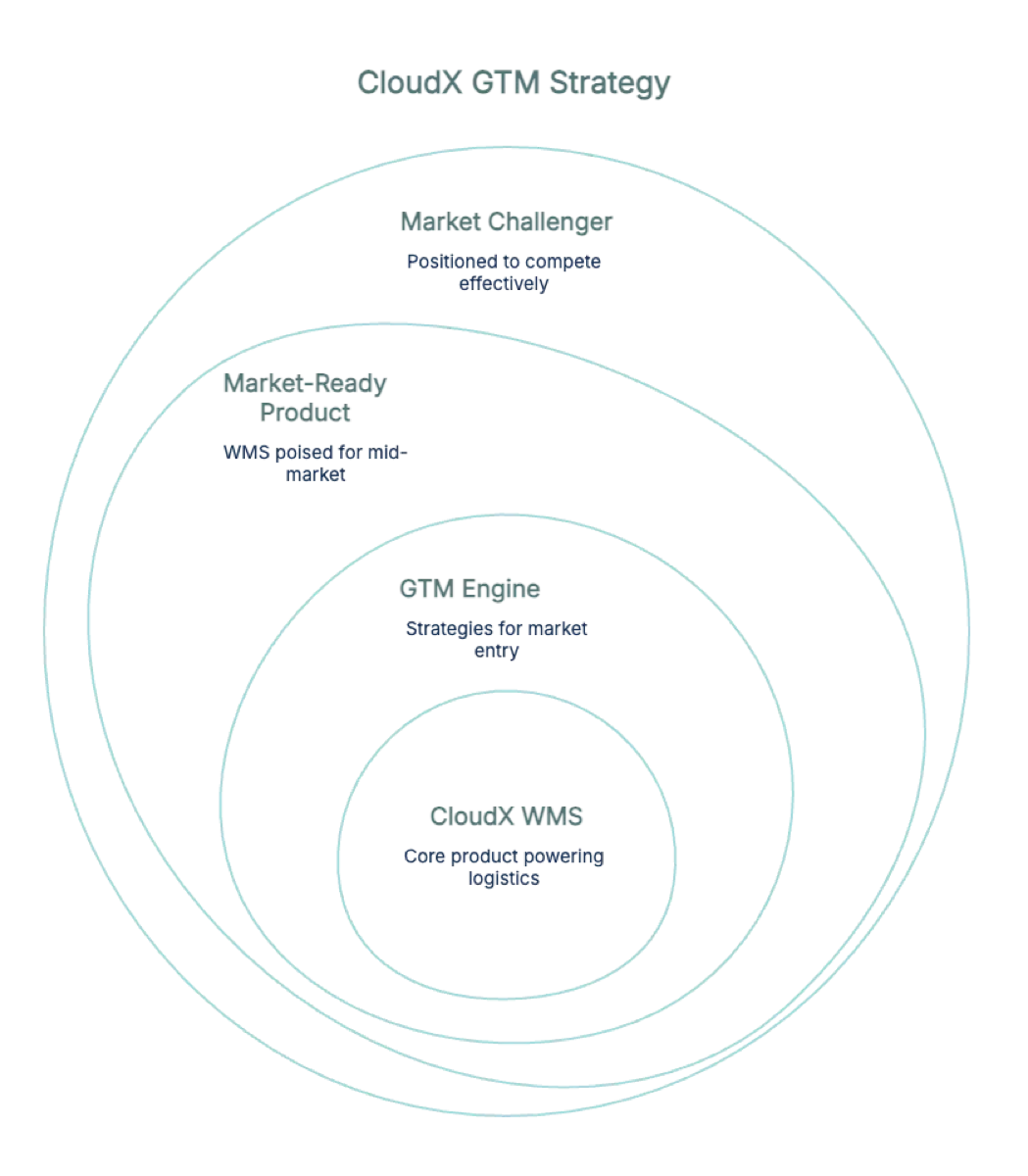
Snapshot
- SegmentMid‑market warehouse management software (WMS) for DTC and omnichannel brands.
- Engagement focusEnd‑to‑end GTM engine: ICP, positioning, website, SEO/AIO/GEO, content, YouTube, pricing, FAQs, and sales enablement.
- OperatorsJason leading GTM architecture and systems; CloudX leadership and sales teams executing in‑market.
What we built
First, we rebuilt the Ideal Customer Profile from the ground up — focusing on mid‑market DTC fashion, lifestyle, outdoor and fitness brands scaling beyond 3PLs and spreadsheets. That ICP informed everything that followed: vertical focus, personas, pain→promise→proof messaging, outreach angles, content topics, and SEO clusters.
We then designed a positioning and messaging system that reframed CloudX as “the WMS built by operators for operators” with unlimited‑user pricing, <90‑day implementation, omnichannel workflows, and multi‑warehouse visibility. That narrative was wired into the website, decks, outreach, video scripts, FAQs, and sales enablement.
In parallel, we audited and re‑architected the website: homepage, platform, pricing, delivery models, integrations, about, white papers, FAQs, and blog. We introduced metadata, clear information hierarchy, keyword‑aligned copy, internal linking, and stronger conversion points tied to the new ICP and narrative.
On top of that foundation we built the CloudX SEO + AIO + GEO strategy: clustered content for mid‑market WMS and DTC operations, entity‑rich copy for AI/LLM understanding, FAQ and objection systems for both search and sales, and structured answers designed to surface in generative search experiences.
Finally, we stood up a content and YouTube engine, pricing narrative, objection‑handling FAQ system, and sales enablement layer — including messaging playbooks, ABM‑lite frameworks, and nurture structure — so the commercial team had assets and scripts that matched the new GTM system.
Outcomes
- ClarityA single, shared definition of the ICP, value proposition, and win logic for CloudX — from leadership through sales.
- SystemA connected GTM engine where website, SEO, content, outbound, FAQs, and sales enablement all tell the same mid‑market WMS story.
- SignalStronger qualitative and quantitative signal on who is engaging, what they care about, and which motions drive real opportunities.
- StoryA commercial narrative that finally matches the strength of the product — positioning CloudX as the operator‑built alternative to legacy WMS.

Stack & approach
The work blended CloudX’s existing product and operational backbone with a modern GTM stack: analytics and dashboards, CRM and pipeline structure, content and SEO tooling, AI/LLM‑driven workflows, crawlers, and outbound systems. Every choice was made to give operators clearer signal — not more noise.
Rather than bolt marketing on top of the product, we built from the inside out: operator insights → ICP → messaging → architecture → content and outreach → enablement. The result is a GTM engine that reflects how CloudX actually works for brands in the warehouse and on the balance sheet.
Want a GTM engine like this for your own market?
Talk with Jason about building or rebuilding your GTM and revenue system — from ICP and positioning to SEO, content, and outbound.